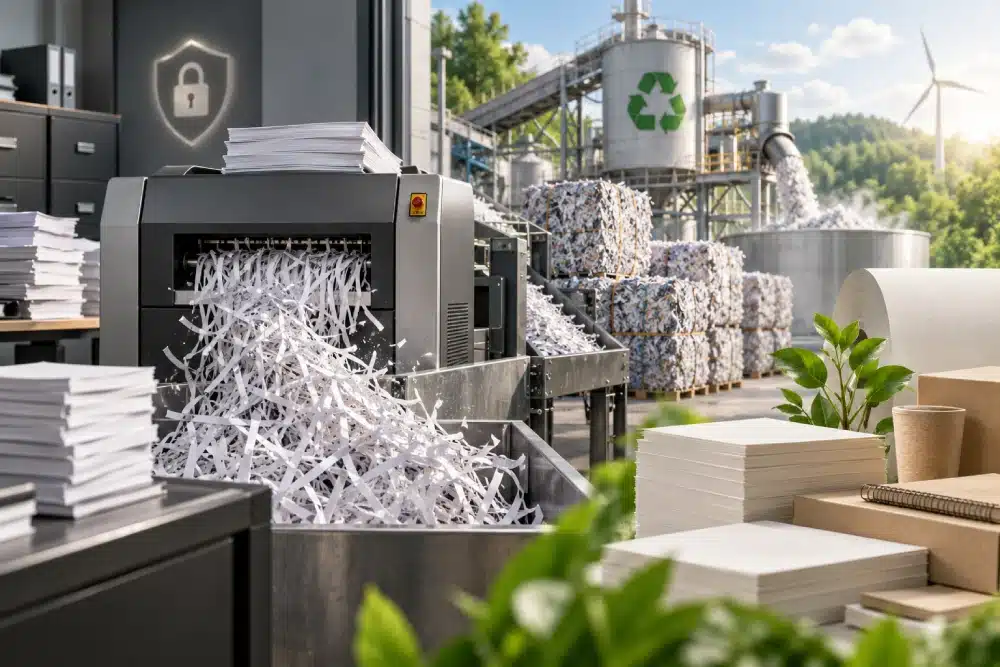
Every organization handles documents that eventually become unnecessary. From outdated financial records and employee files to customer information and internal reports, businesses regularly accumulate paperwork that contains sensitive details. Simply placing these documents in a recycling bin is not enough because confidential information can still be accessed before the material reaches a recycling facility.
Professional document destruction provides a controlled solution by turning confidential records into unreadable paper fragments. However, many businesses still wonder: what happens to shredded documents after the destruction process is complete? Does shredded paper get recycled? Where does it go after leaving the office? How does the process protect privacy while supporting environmental responsibility?
Understanding the journey of destroyed documents helps businesses recognize the importance of secure document destruction. A reliable shredding process does more than remove paper clutter. It creates a documented system for protecting sensitive information, maintaining compliance, reducing waste, and supporting sustainable paper recovery.
From the moment documents are collected to the creation of recycled paper products, every stage of the shredded paper recycling process plays an important role in information destruction and environmental protection.
What Happens Immediately After Your Documents Are Shredded
The document destruction process does not end when paper passes through a shredder. The first stage after shredding focuses on maintaining security, controlling access, and ensuring that destroyed documents cannot be reconstructed.
During professional document destruction, confidential materials are reduced into small shredded paper particles using industrial shredding equipment. Depending on the required security level shredding standard, documents may be processed through strip-cut, cross-cut, or micro-cut shredding systems. Higher-security methods create smaller paper fragments, making reconstruction practically impossible.
Many businesses use scheduled office document shredding programs where employees place outdated records into locked collection containers. These containers are transported through a controlled process, ensuring that confidential materials remain protected from unauthorized access before destruction.
After shredding, the paper is gathered and prepared for transportation. A professional provider maintains a documented chain of custody, which tracks the material from collection through destruction and recycling. This process creates accountability and supports privacy protection throughout the entire service.
A typical secure destruction process includes:
- Collection of confidential records from designated locations
- Transportation through secure handling procedures
- Industrial shredding using appropriate security standards
- Documentation confirming successful destruction
- Transfer of shredded paper for recycling and recovery
For organizations managing large volumes of outdated records, scheduled services such as One-Timepurge shredding services provide an efficient way to eliminate accumulated documents while maintaining compliance with business records retention policies.
After completion, many professional providers issue a certificate of destruction. This document confirms that the materials were destroyed according to established procedures and provides businesses with evidence of compliant document destruction.
The immediate outcome is simple: confidential documents no longer exist in their original form. They have been transformed into unusable paper fragments that cannot expose private information.
Where Does Shredded Paper Go After Document Destruction?
After documents are securely destroyed, shredded paper typically moves into the recycling stream rather than being discarded. The next destination depends on the shredding provider’s recycling partnerships and local waste management systems.
The question of what happens after document shredding is closely connected to responsible material recovery. Professional shredding providers collect large quantities of shredded paper and transport it to specialized sorting facilities or recycling mills where it can be processed into reusable materials.
Unlike ordinary household recycling, commercial paper shredding involves handling large volumes of confidential waste. Businesses may rely on providers that manage everything from collection to final recycling, creating a complete confidential waste management solution.
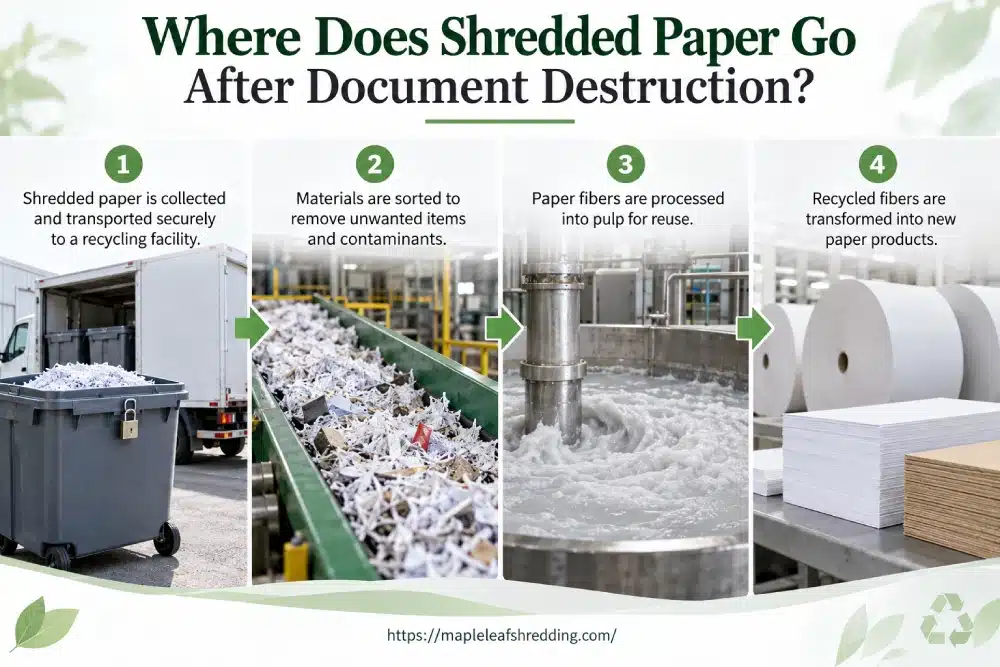
A typical journey after shredding includes several stages:
- Shredded paper is collected and transported securely to a recycling facility.
- Materials are sorted to remove unwanted items and contaminants.
- Paper fibers are processed into pulp for reuse.
- Recycled fibers are transformed into new paper products.
A trusted shredding company Vancouver businesses rely on may work with recycling partners to ensure destroyed documents are responsibly processed instead of unnecessarily sent to disposal facilities.
The recycling process also supports waste reduction by allowing paper fibers to be reused multiple times. This reduces demand for newly harvested resources and contributes to environmentally responsible shredding practices.
For companies handling sensitive documents, choosing a provider that combines information security with recycling efforts ensures that privacy protection and sustainability work together. Secure paper disposal is no longer only about destroying information. It is also about creating a responsible lifecycle for the materials involved.
How Is Shredded Paper Recycled?
The shredded paper recycling process involves several technical steps designed to recover usable fibers while removing materials that cannot be reused. Once shredded documents arrive at a paper recycling facility, they enter a process that transforms paper fragments into raw recycled materials.
The first step is sorting. Recycling facilities separate shredded paper from contaminants such as plastic, metal, adhesive materials, and other non-paper items. This stage is important because clean paper fibers create higher-quality recycled materials.
After sorting, the paper goes through a pulping process. Water and mechanical treatment break down shredded paper into a thick mixture called paper pulp. The pulp contains reusable fibers that can later become part of new paper products.
The recycling process generally includes:
- Sorting and preparation: Removing contaminants and separating usable paper fibers.
- Paper pulp production: Breaking down shredded materials into a reusable fiber mixture.
- De-inking process: Removing ink, dyes, and printing materials from recovered fibers.
- Fiber treatment: Cleaning and preparing pulp for manufacturing.
- Paper production: Creating new sheets, packaging materials, and other recycled products.
The de-inking process is especially important for confidential records because many business documents contain printed text, coloured graphics, or toner-based markings. Removing these materials improves the quality of the recycled paper.
After processing, recycled fibers are used in recycled paper manufacturing. They may become office paper, cardboard packaging, tissue products, and other everyday materials.
The recycled shredded paper journey demonstrates how information destruction can contribute to sustainable waste management. Instead of treating documents as useless waste, recycling facilities recover valuable materials and extend the life cycle of paper products.
Is Shredded Paper Still Secure After Leaving Your Office?
A common concern among businesses is whether confidential documents remain protected after leaving their premises. The answer depends on whether the organization uses professional shredding services or handles destruction independently.
With professional confidential document shredding, security continues beyond the office. A reputable provider follows controlled procedures designed to prevent unauthorized access during transportation, destruction, and recycling.
The secure document destruction process usually includes several safeguards:
- Locked collection containers prevent unauthorized document access.
- Trained personnel handle sensitive materials according to security procedures.
- Transportation follows documented chain of custody practices.
- Destruction records provide proof that materials were processed correctly.
These safeguards are especially important for organizations managing financial records, employee information, customer data, and other sensitive documents.
Professional providers may also follow industry security practices that support privacy regulations and corporate data security requirements. By maintaining documentation throughout the process, businesses can demonstrate responsible handling of confidential waste.
Choosing secure shredding solutions allows organizations to reduce risks associated with improper sensitive document disposal. Even after shredding, responsible handling ensures that confidential materials remain protected until they are converted into recycled materials.
For businesses looking for a complete approach to information protection, secure destruction standards provide confidence that documents are permanently destroyed rather than simply discarded.
Professional Shredding vs Home Shredding
Many individuals and small businesses consider using office shredders to handle outdated paperwork. While basic shredders may appear convenient, they often cannot provide the same level of security, efficiency, or environmental responsibility as professional services.
Home and small office shredders usually create larger strips or fragments that may still contain readable information. They are also not designed for bulk document destruction, making them impractical for organizations with large amounts of confidential paperwork.
Professional shredding services offer several advantages:
- Industrial equipment provides stronger security through smaller shredding sizes.
- Large quantities of documents can be destroyed efficiently.
- Businesses receive documentation such as a certificate of destruction.
- Materials are transferred into responsible recycling channels.
- Organizations reduce the risk of accidental information exposure.
Professional providers also handle specialized projects such as paper document shredding for archived files, expired records, and large-scale cleanouts.
For businesses, the difference is not only the size of the shredder. It is the complete system surrounding the destruction process. Professional services create a secure workflow that includes collection, transportation, destruction, documentation, and recycling.
Using professional destruction methods also supports preventing identity theft by ensuring sensitive information cannot be recovered from discarded paperwork.
Why Businesses Should Choose Certified Document Destruction
Businesses manage a wide range of confidential materials throughout their operations. Contracts, invoices, employee records, medical information, customer files, and financial documents all require careful handling when they are no longer needed.
Certified document destruction provides organizations with a reliable method for eliminating these records while supporting compliance, security, and sustainability goals.
A certified approach helps businesses:
- Protect confidential information from unauthorized access
- Maintain proper documentation of destruction activities
- Support privacy regulations and internal security policies
- Reduce risks associated with improper disposal
- Contribute to environmentally responsible recycling
Certified providers understand that document destruction is not simply a waste removal service. It is part of a larger information security strategy.
For companies with years of accumulated paperwork, bulk document destruction offers an organized way to remove outdated materials without compromising confidentiality. Businesses can schedule planned cleanouts while ensuring their records are destroyed according to established procedures.
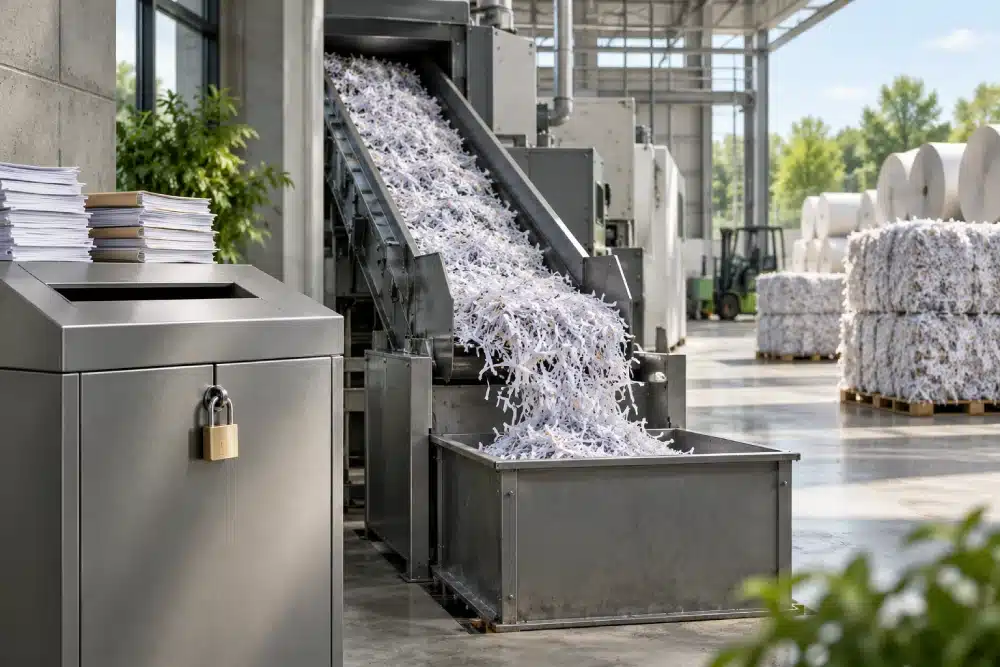
The combination of secure destruction and recycling creates a responsible solution for modern organizations. Confidential shredding services protect valuable information, while recycled paper recovery reduces environmental impact.
Does Shredded Paper End Up in Landfills?
In most professional recycling programs, shredded paper does not immediately go to landfills. Instead, it is collected and processed through recycling systems where usable fibers are recovered.
When properly managed, shredded paper becomes a valuable recyclable material. Recycling facilities transform it into pulp that can be used for producing new paper products.
However, shredded paper may end up in landfills if it is contaminated, mixed with non-recyclable materials, or handled through improper disposal methods. This is why choosing environmentally responsible shredding services is important for businesses that want both security and sustainability.
What Happens to Staples, Paper Clips, and Other Materials?
Many businesses worry about small items attached to documents, including staples, paper clips, binder clips, and folders. Professional recycling facilities are equipped to handle many of these materials.
During processing, sorting equipment removes unwanted materials before paper fibers enter production. Metal components may be separated and recycled independently, while other contaminants are removed to maintain paper quality.
Although removing these items before shredding can improve efficiency, professional systems are designed to manage common office materials safely.
How Professional Shredding Supports Environmental Sustainability
Professional shredding contributes to environmental protection by ensuring paper is recovered instead of unnecessarily discarded. Recycling shredded documents reduces waste, conserves resources, and supports sustainable manufacturing practices.
Organizations using eco-friendly shredding programs can achieve two important goals at the same time: protecting confidential information and reducing environmental impact.
The recovery of paper fibers helps decrease the demand for new raw materials while supporting a circular approach to paper use.
Is shredded paper recyclable?
Yes, shredded paper is recyclable when it is collected and processed correctly. Because shredding changes the physical form of paper but does not remove its fiber value, it can still be used in recycling systems.
The quality of recycled material depends on factors such as contamination levels, paper type, and processing methods. Professional recycling channels provide the best opportunity for shredded documents to become useful recycled materials.
By combining secure destruction with responsible recycling, businesses can protect sensitive information while supporting sustainable resource management.