

Free document shredding can help households clear unwanted paperwork without paying a service fee. However, the absence of a charge says little about how documents are handled, who can access them, or when destruction takes place.
For Vancouver residents and businesses, the important distinction is between a clearly managed service and an arrangement that leaves unanswered questions. A sponsored community event may provide professional equipment and supervised destruction. Another collection point may simply accept boxes for processing elsewhere.
Understanding those differences helps you assess convenience, confidentiality, and the true cost of disposal before handing over personal or business records.
What Does “Free” Document Shredding Actually Include?
Free shredding generally means that someone other than the person bringing documents covers the destruction cost. A sponsor, community organization, or participating provider may fund a limited service. Other events operate through donations, so “free” should not automatically be interpreted as having no expected contribution.
The offer may cover only eligible paper delivered during a specified collection period. Collection from your property, large quantities, business records, and individual destruction documentation may fall outside its scope. Read the conditions before assuming that every part of the disposal process is included.
Likewise, a collection event and a shredding event are not necessarily identical. Documents may enter a shredder at the location, or they may be placed in containers and transported elsewhere. Both arrangements require appropriate handling, but they offer different opportunities to observe what happens.
When reviewing free paper shredding locations, establish who operates the equipment and who takes responsibility for documents before destruction. Ask whether paper recycling after shredding is included and how shredded material is managed.
Searches for “free shredding near me” can identify possibilities, but a search listing alone does not confirm eligibility, availability, or security. The organizer’s current instructions should determine whether the service suits your needs.
When Free Shredding Can Be a Practical Choice
Free shredding services can be suitable for occasional household clear-outs when the quantity is modest and the event’s handling arrangements are clear. A resident disposing of a small collection of expired personal paperwork may find a supervised event convenient and economical.
The benefit extends beyond avoiding a fee. A scheduled free shred day can encourage people to sort accumulated paperwork and remove documents that no longer need to be retained. Secure disposal supports identity theft prevention by reducing opportunities to recover sensitive personal information from discarded records.
Nevertheless, documents should be reviewed before packing. Free tax document disposal and free bank statement disposal are useful only when the records are genuinely ready for destruction. Keep material needed for ongoing disputes, claims, financial administration, or applicable retention requirements.
A community event is most practical when:
- Your documents fit the stated quantity and material restrictions.
- You can attend during the advertised collection window.
- The operator explains how records remain protected until destruction.
- You do not require services or documentation that the event excludes.
For older adults, free shredding services for seniors may reduce disposal expenses. Accessibility still matters: ask about unloading assistance, walking distances, and whether someone can attend on another person’s behalf. An event becomes less useful if transporting the paperwork requires substantial effort or paid assistance.
The most significant risks and drawbacks of shredding documents for free
The central security question is straightforward: is free shredding safe? It can be, provided the service protects documents throughout collection, handling, storage, and destruction. Price alone does not establish the quality of those safeguards. One concern is limited visibility. A participant may receive confirmation that a box was accepted without knowing when its contents will be destroyed. That uncertainty does not prove improper handling, but it makes the process harder to evaluate.
Another consideration is shredding particle size. Strip-cut shredding produces long pieces that may preserve readable sequences, while micro-cut shredding produces smaller fragments. Equipment descriptions should be supported by meaningful specifications. The RCMP’s secure destruction guidance emphasizes making reconstruction of information impractical, rather than treating every shredded result as equally secure. Witnessed shredding can provide reassurance when participants can observe their documents entering the destruction process. However, seeing a truck at an event is not equivalent to watching your own records being processed.
The strongest assessment therefore considers the whole service. Ask who handles the paperwork, how access is controlled, whether destruction is immediate, and what confirmation is available. Paid services deserve the same scrutiny.
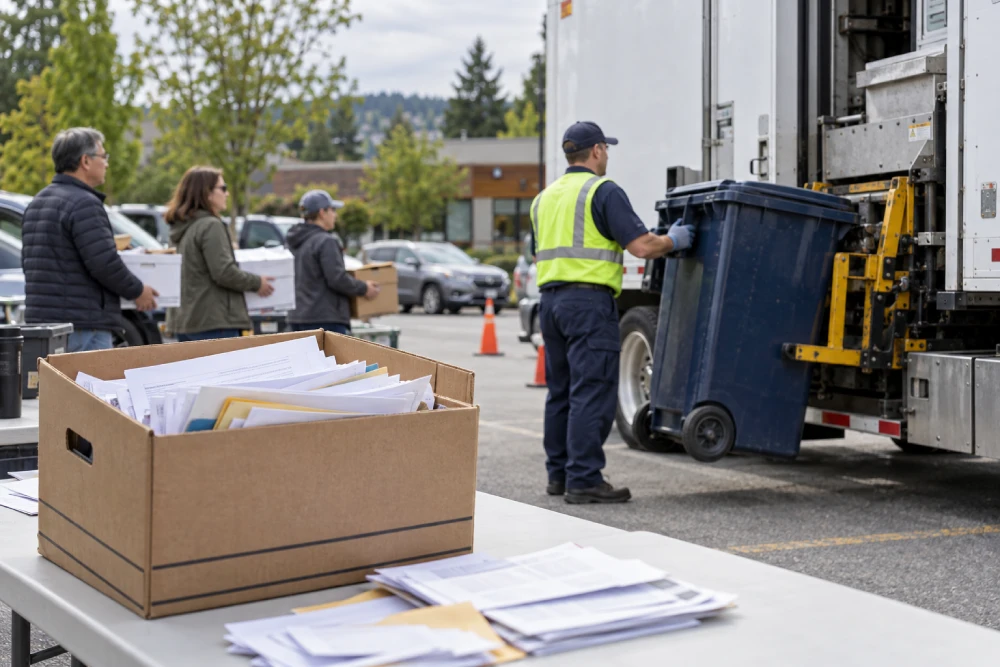
Where Security Risks Can Arise Before Your Documents Are Shredded Free
Unattended document drop-off, open containers, and poorly controlled temporary document storage can expose readable information before destruction occurs. A clear chain of custody identifies who controls the records at each transfer. Canadian privacy guidance recommends secure storage with restricted access while information awaits disposal. Never leave confidential records beside a collection point merely because the event has closed or its containers are full.
The Practical Drawbacks: Volume Limits, Restricted Dates, and Drop-Off Requirements
Even a well-managed event may be unsuitable for your particular clear-out. Free services generally operate within a defined scope, so practical restrictions deserve attention alongside security measures. The most useful event is one that can accept your actual quantity of eligible material at a time you can attend.
Check document preparation requirements before sorting everything into boxes. Organizers may have different rules for binders, plastic sleeves, clips, laminated sheets, and other materials. Do not assume that equipment capable of processing staples can also accept every item found in an office filing cabinet.
Separate paper records from electronic storage devices. A search for HDD Destruction Services near me concerns a different disposal need: hard drives require suitable media destruction or sanitization arrangements. Their acceptance should never be inferred from an advertisement for paper shredding.
Preparation also means confirming the event location, registration arrangements, eligibility rules, and any weather-related changes. An old event page can remain visible in search results after its date has passed. When researching community shredding events Vancouver residents can attend, check the year and the organizer’s latest notice.
Finally, decide what you will do if some documents are rejected. Keep sufficient containers available to take them home securely. Avoid planning a clear-out around the assumption that all material will be accepted, especially when you have mixed office contents rather than paper alone.
Box and Weight Limits: What Happens When You Have Too Much Paper?
A box limit may refer to a specific container size, while a weight limit may apply separately. Confirm both before loading your vehicle. If you exceed the allowance, the organizer may refuse the excess or apply a stated charge. Ask whether limits apply per person, household, or vehicle, and arrange another disposal option for anything outside the permitted quantity.
Limited Event Dates, Queues, and Truck Capacity
An advertised closing time does not necessarily guarantee acceptance until that moment if the event is subject to capacity limits. Check whether advance registration is required and whether collection may end when the truck is full. Allow time for queues, but avoid assuming that early arrival guarantees service. Keep documents under your supervision while waiting for staff to accept them.
Transporting and Unloading Your Own Documents
Paper becomes heavy quickly, particularly when packed into large storage boxes. Use manageable containers and confirm whether unloading assistance is available. Keep records enclosed during transport and avoid leaving them visible in an unattended vehicle. For someone with limited mobility or several flights of stairs, the physical work involved may outweigh the saving from free disposal.
Free vs. Paid Document Shredding: Compare What You Actually Receive
A useful free vs paid shredding comparison examines the service terms, rather than assuming that payment automatically delivers better protection. A sponsored event may use professional equipment and experienced operators. A paid arrangement may offer greater flexibility, but its safeguards still need verification.
Start with the location and timing of destruction. Some on-site shredding services allow customers to observe processing at their property. Other arrangements involve secure collection followed by destruction at a facility. Ask how the provider records collection, controls access, and confirms completion.
Next, compare documentation. A certificate of destruction can record that specified material was destroyed, but its usefulness depends on the details provided and its connection to your collection. It does not independently prove that every earlier handling step was secure.
Capacity and scheduling also influence value. A paid service may accommodate a larger clearance or an agreed appointment, whereas an event may accept only limited household quantities. Confirm these features in writing rather than treating them as standard inclusions.
| Consideration | Free event or collection | Paid service |
|---|---|---|
| Scheduling | Subject to advertised event arrangements | Appointment options depend on the provider |
| Quantity | Confirm box, weight, and eligibility limits | Confirm capacity and pricing basis |
| Transport | Check whether personal delivery is required | Collection may be available |
| Destruction location | Ask whether processing occurs at the event | Confirm on-site or facility processing |
| Documentation | Individual confirmation may be unavailable | Ask what documentation is included |
| Security | Assess handling and access controls | Apply the same assessment |
Why Businesses Need to Assess More Than the Price
Free business record disposal should be evaluated against the organization’s retention procedures, confidentiality commitments, and disposal requirements. Customer files and employee records need an accountable process. Canadian privacy guidance advises organizations to assess disposal providers and the risks of on-site and off-site destruction. Establish what evidence your business needs before choosing an event simply because it accepts paper without charging.
The Hidden Costs of Free Shredding
The financial saving from a free event is real only when considered alongside the effort required to use it. Travel, parking, preparation, unloading, and waiting can all affect whether the arrangement represents good value. These costs vary considerably between households and businesses.
For an individual with one manageable box and a nearby event, the additional effort may be minimal. For a business sending an employee across the city, the calculation includes working time and disruption. A second journey caused by rejected materials or capacity limits adds further expense.
There is also a cost to postponement. Waiting for a suitable event means retaining documents somewhere in the meantime. If secure storage is already limited, accumulating more unwanted paperwork may create avoidable handling difficulties. Move records approved for disposal into controlled storage rather than leaving them in shared areas.
Compare the total effort with a written quote. Pople who researching one-time shredding Vancouver may find that a single scheduled clearance better fits a move, office closure, or accumulated archive. Check minimum charges, collection fees, preparation requirements, and any additional costs before deciding.
The purpose of this comparison is to identify the arrangement that fits the job. Free disposal can remain the economical choice, but the absence of a service fee should not obscure the practical resources required.
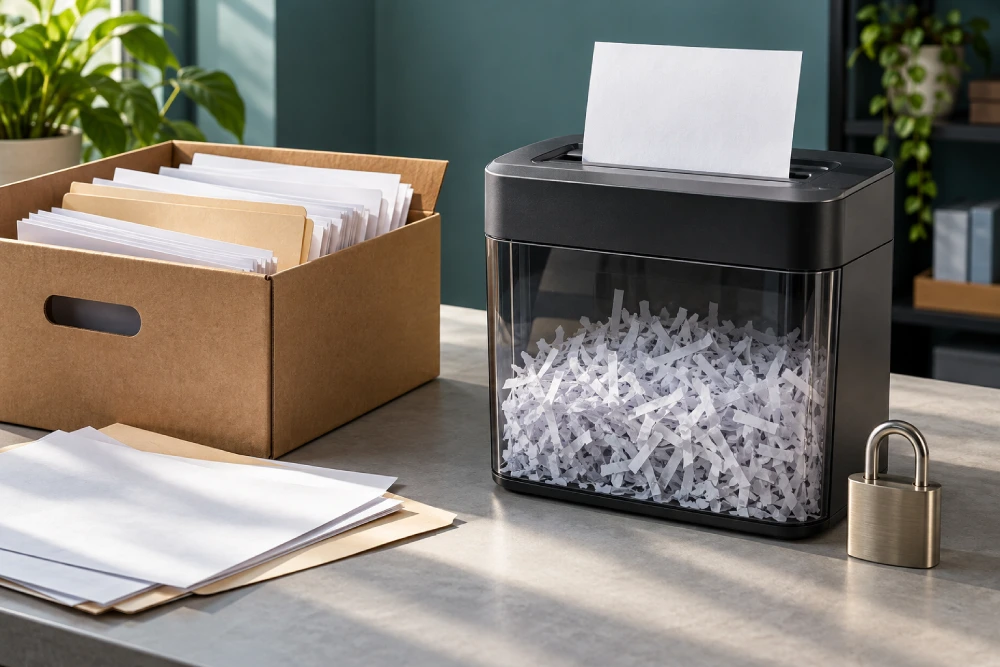
Choosing a Shredding Option for Your Vancouver Home or Business
Begin with the documents themselves. Consider their sensitivity, quantity, retention status, and the consequences of unauthorized access. Then decide whether you need witnessed destruction, collection from your premises, or documentation linked to a particular batch.
When comparing options for paper shredding vancouver, distinguish an organizer’s current event notice from a general directory listing. Verify the date, exact municipality, accepted materials, and operator. A result described as local may involve a substantial journey or refer to an event that has already ended.
Residents seeking free document shredding Vancouver options should also confirm whether participation is open to everyone. Some offers may have eligibility conditions or donation expectations. Ask directly when those details are unclear.
For a paid quote, describe the material and approximate quantity accurately. If contacting maple leaf shredding, explain whether the request concerns household paperwork, business files, or a larger clearance, and ask for the relevant handling arrangements and service terms.
Ultimately, document disposal privacy risks arise when sensitive information remains accessible or responsibility becomes unclear. Choose a service that can explain what happens from handover to destruction. Convenience and price matter, but they are most useful when assessed alongside a clear, credible process.
Questions to Ask Before Using a Vancouver Shredding Event
Before travelling, obtain answers to these practical questions:
- Who operates the shredding equipment and handles incoming records?
- Are documents destroyed at the event or transported elsewhere?
- Can participants observe their own documents being processed?
- What quantity limits and preparation rules apply?
- Are business records accepted?
- Is an individual certificate available?
- What happens if collection ends early or equipment stops working?
FAQ
- Is free shredding safe?
Free shredding can be safe when documents remain supervised and are securely destroyed. Confirm who handles your records, where shredding occurs, and whether you can witness it.
- Where can I find free document shredding in Vancouver?
Check current announcements from community organizations, financial institutions, and local event organizers. Confirm the date, location, eligibility, and quantity limits before travelling.
- Can businesses use free shredding events?
Some events accept business records, while others restrict participation to households. Businesses should confirm eligibility, secure handling procedures, and whether destruction documentation is available.
- What is the difference between free and paid shredding?
Free events may have limited dates and quantities. Paid services may offer scheduled collection, larger volumes, and destruction certificates. Security procedures should be checked for either option.