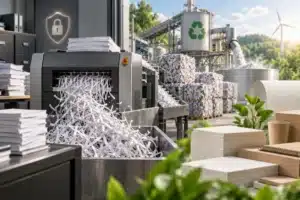

When it comes to protecting sensitive data, shredding paper isn’t enough—you need a secure system and a reliable partner. At Maple Leaf Shredding, we go beyond the shredder to help businesses across British Columbia and surrounding areas stay secure, compliant, and protected.
Here’s a list of essential best practices to elevate your shredding security and reduce the risk of data breaches.
Limit Access to Documents While They’re Still in Use
Document security starts long before a file reaches the shredding bin. Client contracts, employee records, and financial reports should only be accessible to people who need them for their work. Keep active paper files in controlled storage, collect confidential printouts promptly, and avoid leaving sensitive paperwork visible in meeting rooms or shared workspaces. A secure disposal process cannot protect a document that has already been exposed.
Make access checks part of your everyday routine. Assign responsibility for shared filing areas, keep cabinet keys secure, and review access when employees change roles or leave the business. Before stepping away from a desk, put confidential paperwork away and lock your screen. These small habits help protect information throughout the working day, not just at closing time.
Extend Your Document Security Policy to Home Offices
Working from home should come with clear instructions for handling business paperwork. If employees need to print confidential documents, establish where those records can be stored, who may access them, and how they should be returned or securely destroyed. Keep work files separate from household paperwork, and provide a designated contact for questions about disposal. Consistent guidance helps employees follow the same security practices wherever they work.
Include home office paperwork in your next approved cleanout rather than letting it accumulate unnoticed. For businesses considering one-time shredding Vancouver services, identify which remote-work records are ready for destruction and coordinate their secure collection. Our one-time purge service can support occasional document cleanouts, giving your team a planned way to dispose of accumulated files.
Know What Needs to Be Shredded
Shredding isn’t just for outdated paperwork. Private information lives on:
-
HR and employee files
-
Medical records
-
Banking statements
-
Marketing reports
-
Client contracts
-
USB drives and hard disks
If it contains names, numbers, or signatures, it needs to be securely destroyed.
Choose a Certified Shredding Provider
Office shredders may seem convenient, but they’re slow, prone to jams, and leave you vulnerable. Worse, improperly shredded documents can be pieced back together.
Maple Leaf Shredding provides:
-
On-site shredding with locked bins
-
One-time purge services
-
Drop-off shredding options
-
Certificates of destruction for your records
Need help choosing the right option? Check out our shredding services here.
Set Up a Shredding Policy
A clear, company-wide shredding policy outlines:
-
What should be shredded
-
How documents should be handled
-
Where documents are stored until destruction
This prevents errors and ensures every department follows the same shredding protocol.
Secure Documents Before Shredding
Leaving sensitive files in open recycling bins or on desks is a major security risk. We recommend locked collection consoles that we pick up during scheduled visits.
Our scheduled on-site shredding includes secure 32-gallon or 65-gallon bins to store documents safely until destruction.
Shred Digital Data, Too
Old hard drives, memory cards, or laptops can contain years of sensitive files—even if you “delete” them.
Ask us about media destruction services to ensure digital files are gone forever.
Request a Certificate of Destruction
Every shredding session should include a Certificate of Destruction. It’s your documented proof that materials were securely handled and disposed of, and it helps with legal compliance (especially under PIPEDA and provincial privacy laws).
All services from Maple Leaf Shredding include certificates at no extra cost.
Train Your Team
Human error is the weakest link in any data protection plan. Train staff regularly on how to:
-
Recognize sensitive documents
-
Use secure shredding bins
-
Avoid digital risks like phishing
Security culture starts with your team.
Final Thoughts: Shredding Security Starts With You
Document shredding is the foundation of a secure office—but it only works if done right. Partnering with a professional shredding company like Maple Leaf Shredding means you don’t have to worry about mistakes, non-compliance, or leaks.
We’re here to protect your data—one secure shred at a time.
Track Retired Hard Drives Through to Destruction
An old computer in a storage cupboard should not become a forgotten security responsibility. Before disposing of equipment, identify the drives it contains and record useful details such as asset tags, serial numbers, and the person authorizing disposal. Confirm that any information your business still needs has been transferred and checked. Keep retired drives in restricted storage while destruction arrangements are being made.
When comparing HDD Destruction Services Vancouver providers, ask which drive types they accept, how devices are tracked, and whether destruction documentation can identify individual drives. Confirm these details before collection rather than assuming every service includes serial number reporting. Matching the completed destruction records against your inventory helps you account for the devices you handed over and identify any outstanding items.
📞 Ready to upgrade your shredding security?
Call us at 604-227-2020 or Get a Quote now.
We offer flexible on-site shredding, one-time purges, and drop-off services for businesses across BC.
FAQ
- Should a clean desk policy apply during the working day?
Yes. Secure confidential paperwork and lock your screen whenever your workspace is unattended, including during meetings and breaks.
- How should remote employees dispose of confidential paperwork?
Follow the company’s approved disposal process. Store documents securely until authorized collection or shredding, and keep them out of household waste.
- Should I record hard drive serial numbers before destruction?
Yes, where available. Serial numbers help you track individual drives and compare your inventory with the provider’s destruction documentation. Confirm reporting options when booking.