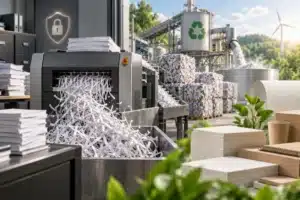

Businesses and individuals handle large amounts of paper every day, including invoices, financial records, employee files, medical information, contracts, and other documents containing sensitive information. When these records are no longer needed, choosing the correct disposal method is essential for protecting privacy and preventing unauthorized access.
Many people assume that recycling paper documents is always a responsible choice because it reduces waste and supports environmental sustainability. However, when documents contain confidential information, recycling alone may not provide the level of protection required. Understanding the difference between shredding and recycling paper helps individuals and organizations make better decisions about confidential paper disposal.
While recycling focuses on recovering paper materials for reuse, document shredding focuses on permanently destroying information before the paper enters the recycling process. For confidential records, secure document destruction is often the safest approach because it helps prevent privacy breaches, identity theft, and unauthorized access to private data.
What Is the Difference Between Shredding and Recycling Paper Documents?
Shredding and recycling paper documents are two different processes with different goals. Recycling is designed to reduce paper waste by converting used paper into new paper products. Shredding, on the other hand, is a security-focused process that destroys documents so the original information cannot be read or reconstructed.
Understanding the difference between shredding and recycling paper is especially important for businesses that manage customer records, employee information, financial documents, and other confidential materials. A document that appears to be ordinary paper may contain information that could create serious risks if it reaches the wrong person.
How Paper Recycling Works
Paper recycling involves collecting used paper, sorting it, removing contaminants, and processing it into new paper products. During this process, paper is usually transported through multiple stages before it is converted into recycled materials.
The general recycling process includes:
- Collection of discarded paper materials from homes and businesses
- Sorting paper based on type and quality
- Processing paper into pulp through water and mechanical treatment
- Removing unwanted materials such as ink, adhesives, and other contaminants
- Creating new paper products from recycled materials
Although paper recycling is valuable for environmental protection, it is not designed to guarantee information destruction. Documents placed into recycling bins may still contain readable personal or business information before they are processed.
How Secure Document Shredding Works
Secure document shredding is a controlled destruction process designed to make confidential records unreadable. Professional shredding providers use industrial equipment that cuts documents into small pieces, preventing information from being reconstructed.
A secure shredding process typically includes:
- Collecting documents using locked shredding bins or secure containers
- Transporting documents through controlled procedures
- Destroying paper using professional shredding equipment
- Recycling shredded paper after confidential information has been eliminated
- Providing documentation of destruction when required
For companies handling large volumes of records, business document shredding provides a reliable way to protect confidential information while maintaining responsible paper waste management practices.

Why Recycling Confidential Documents Can Create Security Risks
Recycling confidential documents without first destroying the information can expose individuals and organizations to unnecessary risks. Although recycling facilities follow procedures for processing paper, their primary purpose is material recovery, not guaranteed data protection.
Confidential Papers Can Be Accessed Before Recycling
Before paper reaches a recycling facility, it may pass through several stages of collection, transportation, and sorting. During this time, confidential documents may be viewed, removed, or improperly handled.
Documents containing account numbers, customer details, employee records, or business information can create serious security concerns if they are not properly destroyed. Even a single document can provide enough information for criminals to commit fraud or attempt identity theft.
Many organizations use secure disposal of paper documents because it reduces the chance that sensitive records will be exposed during the disposal process. A controlled destruction method ensures that confidential materials are handled appropriately from the moment they leave an office.
Recycling Does Not Guarantee Information Destruction
A common misunderstanding is that placing documents into recycling automatically makes the information unavailable. However, recycling does not immediately destroy the content printed on paper.
Documents can remain readable before the recycling process begins. This means recycling alone may not be the safest way to destroy confidential documents, especially when dealing with records containing personal information protection concerns.
Businesses should evaluate their disposal procedures and determine whether documents require recycling or complete destruction. The safest approach depends on the type of information contained within the records.
Confidential Information May Create Compliance Problems
Organizations often have legal and industry requirements regarding the handling of confidential records. Improper disposal of sensitive documents can result in compliance issues, financial penalties, and damage to customer trust.
A secure shredding company can help businesses follow appropriate disposal procedures by providing a documented destruction process. Certified document destruction services also help demonstrate that confidential materials were handled according to established security standards.
Companies should also consider their records retention policy before destroying documents. Keeping records longer than required can create unnecessary risks, while destroying them too early may violate legal obligations.
Why Shredding Is Safer for Confidential Documents
When comparing shredding vs recycling confidential documents, shredding provides a higher level of protection because it focuses specifically on destroying information. Recycling can be part of a responsible disposal strategy, but confidential materials should generally be destroyed before entering the recycling stream.
Shredding Makes Documents Unreadable
The main advantage of shredding is that it permanently removes the ability to read or recover information from paper documents. Professional shredders break documents into small pieces that cannot be easily reconstructed.
This makes shredding one of the safest options for protecting confidential records, including:
- Financial statements and tax documents
- Employee files and payroll records
- Customer information and contracts
- Medical documents and personal records
- Legal paperwork containing private details
Organizations looking for the best way to destroy sensitive paper documents often choose professional shredding because it provides both security and convenience.
For businesses that need regular protection, secure paper shredding services help maintain consistent disposal practices and reduce the risk of accidental information exposure.
Professional Shredding Provides a Secure Chain of Custody
A major benefit of professional shredding is the secure chain of custody. This means documents are tracked and protected throughout the entire destruction process, from collection to final disposal.
A proper chain of custody may include secure containers, trained personnel, controlled transportation, and certificates confirming destruction. These steps provide confidence that confidential records are not exposed during handling.
For organizations requiring flexible options, one-time document shredding can be used for temporary projects such as office cleanouts, record purges, or document disposal events.
Shredded Paper Can Still Be Recycled
A common concern is whether shredding conflicts with environmental responsibility. In reality, shredded paper can still be recycled after confidential information has been destroyed.
After shredding, paper materials can be processed into recycled products while maintaining privacy protection. This approach combines secure disposal with environmental responsibility.
Professional providers offering on-site document shredding allow businesses to destroy documents at their location before the shredded material is recycled. This provides additional convenience and security for organizations managing sensitive information.
Documents witch Should Be Shredded Instead of Recycled
Many paper documents contain information that should never be placed directly into recycling bins. When deciding what documents should never be recycled, consider whether the paper includes personal, financial, legal, or business-related information.
Examples of documents that should usually be shredded include:
- Bank statements, credit reports, and financial records
- Tax documents containing identification information
- Employee records and payroll documents
- Customer files and account information
- Contracts and legal agreements
- Medical records and insurance documents
- Internal business reports and confidential communications
The following examples highlight common situations where destruction is safer than recycling in Protect Sensitive Data Examples.
Proper confidential paper disposal helps organizations prevent data breaches and maintain trust with customers, employees, and partners.

Some companies also use vancouver Mobile Shredding Services to securely handle large amounts of documents while ensuring confidential materials are destroyed before recycling.
Common Mistakes When Disposing of Confidential Paper Documents
Many privacy problems happen because people underestimate the risks associated with paper disposal. Common mistakes include placing confidential documents directly into recycling containers, failing to remove outdated records, or using unsecured disposal methods.
Other mistakes include:
- Throwing sensitive documents into regular garbage bins
- Allowing employees to dispose of confidential records without guidelines
- Ignoring secure disposal procedures
- Failing to separate confidential paperwork from ordinary recyclable paper
- Keeping unnecessary records that increase security risks
Companies should create clear procedures for handling confidential materials. Employee training, locked shredding bins, and professional destruction services can significantly improve data security.
Understanding how companies destroy confidential records helps organizations develop better privacy practices and reduce the possibility of a privacy breach.
Shredding vs Recycling: Which Method Is Better?
The answer depends on the type of paper being disposed of. For ordinary paper without sensitive information, recycling is an effective and environmentally responsible option. However, confidential documents require a higher level of protection.
When comparing shredding vs recycling documents, shredding is the safer choice for materials containing personal or business information. Recycling can preserve resources, but it does not guarantee that private information has been destroyed.
The ideal approach combines both methods:
- Shred confidential documents first
- Recycle shredded paper afterward
- Maintain secure disposal procedures
- Follow retention and destruction requirements
This approach provides both privacy protection and environmental benefits. Whether managing a small collection of personal papers or a large bulk document disposal project, secure destruction should come before recycling when sensitive information is involved.
Professional office paper shredding services help organizations maintain a reliable disposal process while reducing the risk of unauthorized access to confidential records.
Frequently Asked Questions
- Can confidential documents be recycled?
Yes, confidential documents can eventually be recycled, but they should usually be shredded before recycling. Recycling alone does not guarantee that sensitive information has been destroyed.
- Should you shred documents before recycling?
Yes. If documents contain personal, financial, legal, or business information, shredding them before recycling is the safest option. This ensures information is destroyed before the paper enters the recycling process.
- Is shredded paper safe for recycling?
Yes. Shredded paper can be recycled after documents have been securely destroyed. Many professional shredding providers recycle the shredded material after completing the destruction process.
- What is the safest way to destroy confidential documents?
The safest method is professional shredding through a secure disposal process that includes controlled handling, destruction verification, and responsible recycling.
- What is document destruction vs recycling?
Document destruction focuses on eliminating confidential information, while recycling focuses on recovering paper materials. For sensitive records, destruction should happen before recycling.
- How can businesses prevent data breaches from paper documents?
Businesses can reduce risks by using secure disposal methods, implementing document retention policies, training employees, and working with certified destruction providers.