For decades, the noisy home paper shredder was a must-have appliance for ensuring financial security. But in today’s increasingly cloud-based world, is that bulky machine sitting in your home office a relic of the past or still an absolute necessity?
It is easy to fall into a false sense of security because most of our banking is done online. However, even in the digital age, Canadians receive millions of physical documents every single year, ranging from sensitive Canada Revenue Agency (CRA) notices to detailed medical records and insurance forms. To make informed decisions about what to carefully shred and what to simply drop in the recycling bin, we need to cut through the noise. Here is your comprehensive, no-nonsense guide to protecting your identity, staying compliant with stringent privacy laws, and maintaining eco-friendly habits in British Columbia.
Why Is Document Shredding Important in the Digital Age?
Even in today’s digital world, document shredding remains an essential step in protecting personal and business information. While many financial records, bills, and communications are now stored online, sensitive paper documents containing names, addresses, Social Insurance Numbers (SIN), account details, medical information, and confidential business data are still created every day. Simply throwing these documents into the trash or recycling bin can expose individuals and organizations to identity theft, fraud, and privacy breaches. Secure document shredding ensures that confidential information is permanently destroyed and cannot be recovered by unauthorized individuals. Whether you are clearing old household files or managing business records, professional document destruction provides a reliable way to protect privacy, maintain compliance, and reduce the risks associated with improper document disposal.
What Happens If You Throw Away Documents Without Shredding?
Throwing away sensitive documents without shredding them can create serious security risks because criminals can use discarded paperwork to collect personal information and commit identity theft. Bank statements, tax documents, expired identification, medical records, and business files may contain valuable details that can be used for fraudulent activities. For businesses, improper disposal of confidential documents can also lead to privacy violations, damaged reputation, and potential legal consequences under regulations such as PIPEDA and British Columbia’s Personal Information Protection Act (PIPA). Proper document destruction eliminates these risks by ensuring sensitive information is destroyed before it leaves your control.
The Tangible Risks of Improper Disposal
Why should you still care about physical paper when hackers are targeting online databases? The truth is that analog risks are very real and often much easier for criminals to exploit:
- Identity Theft: Cybercrime requires technical skills, but analog “dumpster diving” is incredibly easy and surprisingly common. Thieves actively hunt through household and commercial trash for Social Insurance Numbers (SIN), medical information, and physical signatures. They use these disconnected pieces of information to commit synthetic identity fraud, allowing them to open fraudulent credit lines, take out loans, or even file false tax returns in your name.
- Corporate Espionage and Business Liability: For businesses, a physical data breach can be just as devastating as a digital hack. Improperly discarded paperwork can lead to leaked trade secrets, compromised client lists, and the exposure of confidential employee records. This can result in irreversible reputational damage and a total loss of consumer trust.
- Severe Legal Penalties: Secure document destruction is not just a good idea; it is a strict legal mandate for organizations. Failing to properly dispose of private data can lead to massive fines, mandatory audits, and class-action lawsuits under several key regulations:
- PIPA (British Columbia’s Personal Information Protection Act): Regulates how private businesses in BC must securely collect, handle, and ultimately dispose of personal information to prevent unauthorized access.
- PIPEDA (Canada’s federal standards): Governs data privacy for commercial businesses across Canada, requiring strict physical and technological safeguards for all records.
- GDPR (General Data Protection Regulation): A rigorous European Union regulation with massive global reach that heavily penalizes the mishandling of consumer data, affecting any Canadian company that serves EU citizens.
Common Documents That Require Professional Shredding
Many everyday documents contain personal or confidential information that should never be disposed of without proper destruction. Individuals should consider professional document shredding services for materials such as old tax returns, bank statements, credit card offers, cancelled cheques, pay stubs, insurance documents, medical records, legal paperwork, and documents containing Social Insurance Numbers. These files often contain enough information for criminals to create fraudulent accounts, access personal data, or misuse private details.
Businesses typically handle much larger volumes of sensitive paperwork, making secure document destruction even more important. Companies should regularly shred customer records, employee files, financial reports, contracts, invoices, client information, internal communications, and outdated operational documents. Using a professional shredding provider helps organizations maintain privacy standards, protect confidential information, and receive documentation such as a Certificate of Destruction as proof that records were securely destroyed.
Categorizing Your Documents: To Shred or Not?
Not all paper is created equal. Treating every piece of mail like a top-secret document wastes time and burns out your shredder’s motor. Use this detailed categorization system to streamline your disposal process:
- High-Risk (Mandatory Shredding): These are documents containing Personally Identifiable Information (PII) and detailed financial or legal records.
- Examples: SIN cards, voided cheques, pay stubs, bank statements, medical summaries, legal contracts, and tax returns.
- Rule of Thumb: The Canada Revenue Agency (CRA) requires you to keep tax records and their supporting documents for six years. Once that period expires, you should destroy them completely and immediately.
- Medium-Risk (Shred to be Safe): Items that might not contain your SIN but still give criminals valuable clues about your habits, lifestyle, or location.
- Examples: Travel itineraries and boarding passes (which broadcast to criminals that your home is currently empty), expired IDs, utility bills, shipping labels from packages, and pre-approved credit card offers.
- Zero-Risk (Safe to Recycle Intact): Everyday paper waste that contains no usable personal data.
- Examples: Generic grocery receipts (which mask your full credit card number), magazines, newspapers, grocery store flyers, and generic junk mail addressed to “Resident” or “Current Occupant.” Do not shred these items; put them straight into your blue recycling bin.
Smart Alternatives to Personal Shredders
If you do not have a personal shredder, or if you have a massive backlog of documents that would take hours to process manually, you have much better and safer options:
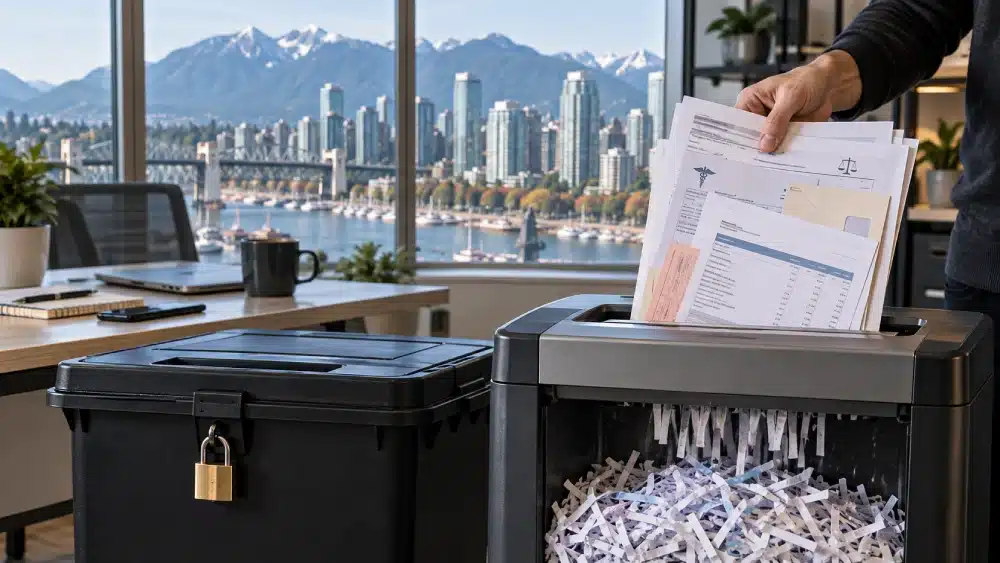
- Professional Destruction Services: This is the ideal solution for bulk shredding or business cleanouts. If you have sensitive household documents, Residential Shredding options are also widely available and highly convenient. Look for Onsite Shredding mobile trucks that destroy documents right in your driveway, or utilize local secure drop-off bins. Always ensure the provider is NAID AAA certified, which guarantees they follow strict security protocols. Finally, always ask for a “Certificate of Destruction” for your legal protection and peace of mind.
- DIY Water Pulping: If you are dealing with just a few sensitive documents and lack a shredder, you can use the water pulping method. Soak your sensitive documents in a bucket of warm, soapy water for 24 hours. You can also add a small amount of bleach to help break down the ink. Afterward, mix the paper vigorously with a paint mixer or a sturdy stick until it becomes an illegible, mushy pulp. (Note: Do not attempt to burn documents. Backyard burning is illegal, highly dangerous, and terrible for the air quality in most BC residential areas).
- Preventative Digitization: The safest piece of paper is the one that never existed in the first place. Switch your banking, utilities, and tax documents to e-statements. Use encrypted cloud storage or secure local hard drives to keep digital copies of important records, thereby eliminating the physical risks entirely.
The Environmental Impact of Shredding
Many people mistakenly assume that shredding everything is an eco-friendly practice because it is paper. In reality, it creates a frustrating recyclability paradox:
- The Problem with Fibers: Paper recycling relies on the length of the paper fibers. Shredding aggressively chops these fibers into tiny pieces, drastically reducing their quality and their lifespan in the recycling loop. Worse, loose shredded paper acts like confetti. When it arrives at a recycling facility, it slips through the screens and severely jams the municipal sorting machinery, causing facility shutdowns.
- The BC Solution: If you must shred your documents, Recycle BC strictly mandates that you cannot put loose shredded paper directly into your blue bin. You must securely contain the shredded bits inside a sealed paper bag or a small cardboard box first to ensure it makes it through the sorting process intact.
- Alternative Eco-Friendly Uses: Because shredded paper is very high in carbon, it makes a fantastic addition to backyard compost bins, helping to balance out nitrogen-rich food scraps. It is also incredibly useful as free, sustainable packing material for shipping fragile items or storing holiday ornaments.
Conclusion
So, is shredding physical documents really necessary in today’s world? Yes, but it must be done with calculated precision. You do not need to waste your time shredding every piece of junk mail or magazine that enters your home. However, securely destroying high-risk financial, medical, and legal files remains an absolute non-negotiable step in protecting your identity.
Take some time this weekend to audit your filing cabinets. Toss the zero-risk paper directly into the blue bin, digitize whatever you can to reduce physical clutter, and securely destroy the remaining high-risk files. Taking these simple steps to protect your data ultimately protects your peace of mind.
Choosing a Secure Document Shredding Provider in Vancouver
Choosing the right document shredding provider in Vancouver requires more than simply finding a company that destroys paper. A reliable shredding service should follow strict security procedures, offer convenient options such as mobile shredding or scheduled pickups, and provide transparent documentation confirming that your records were properly destroyed. Maple Leaf Shredding provides secure document destruction solutions for homes and businesses throughout Vancouver and surrounding areas, helping customers safely dispose of confidential paperwork while maintaining privacy and peace of mind. Whether you need a one-time document purge or ongoing shredding services, working with an experienced local provider ensures your sensitive information is handled responsibly from collection to final destruction.
Frequently Asked Questions
- What documents should I shred instead of recycling?
Documents containing personal or financial information, such as bank statements, tax records, medical files, and documents with your SIN, should always be shredded instead of placed in regular recycling. Destroying these papers helps prevent identity theft and unauthorized access to private information.
- Is professional document shredding safer than using a home shredder?
Yes, professional document shredding provides a higher level of security, especially for large volumes of confidential paperwork. Professional services use industrial shredding equipment, secure handling procedures, and often provide a Certificate of Destruction.
- How long should I keep tax documents before shredding them?
In Canada, tax records generally need to be kept for six years from the end of the tax year they relate to before they can be securely destroyed. After the retention period expires, shredding these documents helps protect your financial information.
- Can shredded paper be rcycled?
Yes, shredded paper can often be recycled, but it should not usually be placed loose in recycling bins because small paper pieces can create processing problems. Follow local recycling guidelines and contain shredded paper properly when required.
- What is mobile document shredding?
Mobile document shredding is a service where a secure shredding truck comes directly to your home or business location to destroy confidential documents on-site. This option provides convenience, security, and peace of mind because customers can see their documents being destroyed before they are recycled.